

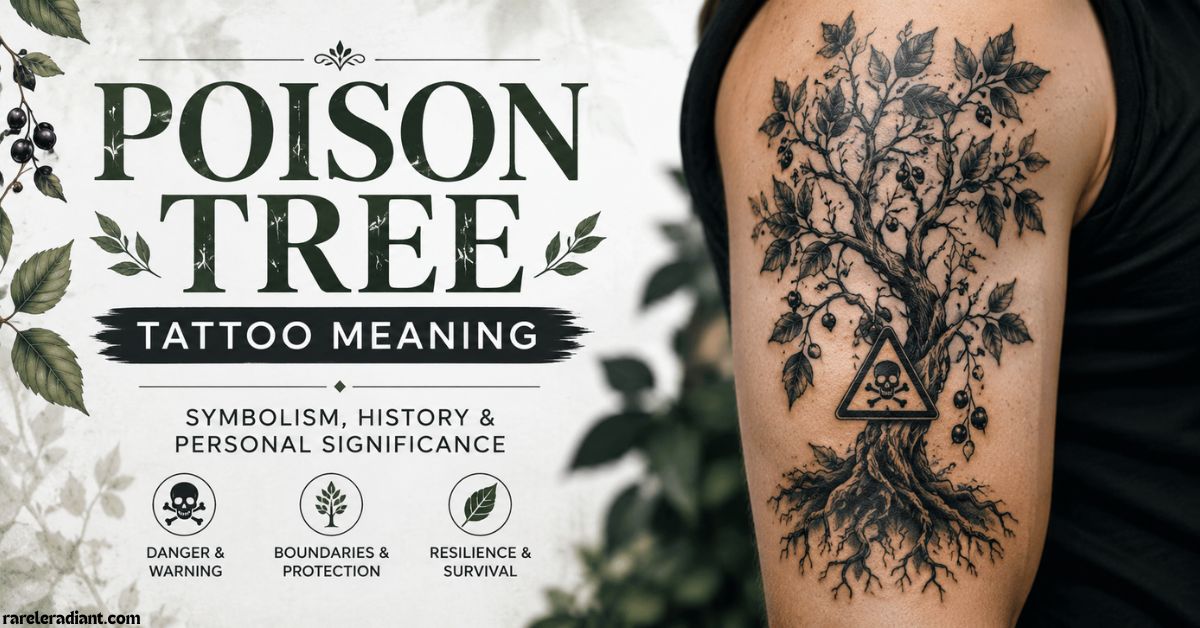
Tattoos often tell stories that words cannot. Some celebrate love while others honor family or mark a life-changing event. The poison tree tattoo meaning stands apart because it represents something deeply emotional. It explores hidden anger, betrayal, personal growth, and the lasting effects of emotions left unresolved.
At first glance, a poison tree tattoo may appear dark or mysterious. However, its symbolism goes far beyond appearances. For many people, this design serves as a reminder that emotions can grow just like seeds. When you nurture kindness, you create peace. When you feed resentment, bitterness can take root and spread.
The modern meaning of this tattoo comes largely from William Blake’s famous poem “A Poison Tree.” Yet today’s tattoo enthusiasts often personalize the design to reflect their own experiences. Some see it as a warning against revenge. Others wear it as proof that they survived emotional pain and emerged stronger.
If you’ve ever wondered what does the poison tree tattoo mean or what does a poison tree tattoo mean, this guide explains every important interpretation. You’ll also discover its literary roots, psychological symbolism, spiritual meaning, and why this striking design continues to inspire tattoo lovers worldwide.
What Does a Poison Tree Tattoo Mean?
The poison tree tattoo meaning revolves around emotions that grow over time. Unlike tattoos that symbolize instant change, this design reflects gradual transformation. Just as a tree begins with a tiny seed, emotions also start small before becoming powerful.
Instead of representing evil itself, the poison tree often symbolizes the consequences of holding onto destructive feelings.
The Core Meaning at a Glance
| Symbol | Meaning |
|---|---|
| Hidden anger | Emotions kept inside instead of expressed |
| Betrayal | Pain caused by broken trust |
| Revenge | The desire to hurt someone who caused suffering |
| Emotional growth | Learning from difficult experiences |
| Self-awareness | Understanding your darker emotions |
| Healing | Letting go of resentment before it consumes you |
| Personal transformation | Turning pain into wisdom |
While revenge remains one interpretation, many modern tattoo owners view the poison tree as a symbol of healing rather than hatred.
Why People Choose This Tattoo Today
Every tattoo tells a personal story. That makes the poison tree especially meaningful because no two experiences are exactly alike.
People often choose this design after experiencing:
- A painful betrayal
- Emotional manipulation
- A difficult breakup
- Family conflict
- Toxic friendships
- Personal healing
- Overcoming depression or anger
- Major life transformation
Instead of hiding painful memories, they transform them into meaningful artwork.
“The strongest roots often grow from the hardest seasons.”
For many wearers, the tattoo becomes a reminder to never allow bitterness to control their future again.
The Origin of the Poison Tree Symbol
To fully understand the poison tree tattoo meaning, it’s important to know where the symbol came from.
The design traces back to one of English literature’s most famous poems.
William Blake’s A Poison Tree
William Blake published “A Poison Tree” in 1794 as part of his collection Songs of Experience.
Although the poem contains only sixteen lines, its message remains remarkably powerful more than two centuries later.
The poem compares hidden anger to a seed.
Instead of expressing his frustration honestly, the speaker keeps feeding it with fear, resentment, and deception. Eventually, the anger grows into a poisonous tree that produces beautiful but deadly fruit.
An enemy eats the fruit and dies beneath the tree.
The poem isn’t really about murder.
It’s about how unspoken anger slowly poisons both the person holding it and everyone around them.
That lesson continues to resonate with readers today, making it one of the most influential literary symbols used in tattoo art.
How the Poem Inspired Modern Tattoo Culture
Tattoo artists often draw inspiration from literature because written stories already carry rich symbolism.
A Poison Tree offers everything a symbolic tattoo needs:
- Strong imagery
- Emotional depth
- Moral lessons
- Timeless relevance
- Visual storytelling
Rather than tattooing the poem itself, many people choose symbolic elements like twisted branches, poisoned fruit, dead leaves, ravens, or dark roots.
Each element expands the story while allowing personal interpretation.
Literary Meaning vs Personal Interpretation
One fascinating aspect of this tattoo is how its meaning evolves.
The poem focuses on suppressed anger and revenge.
Modern tattoo meanings are much broader.
| Literary Meaning | Modern Tattoo Meaning |
|---|---|
| Hidden anger | Emotional healing |
| Revenge | Personal growth |
| Betrayal | Survival |
| Deception | Self-awareness |
| Consequences | Life lessons |
| Moral warning | Emotional resilience |
Because of this flexibility, two people may have identical poison tree tattoos that represent completely different life experiences.
Poison Tree Tattoo Meaning: The Deep Symbolism
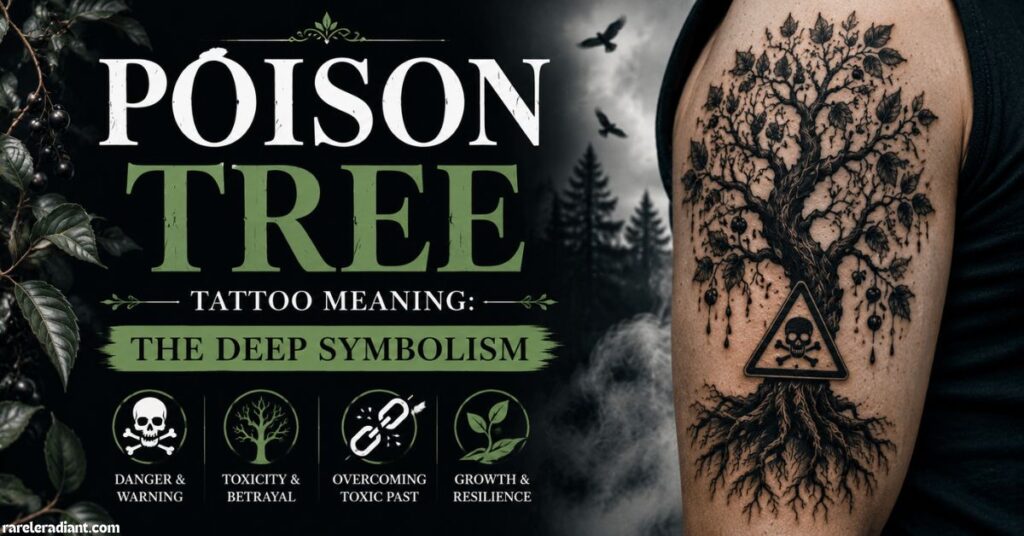
At its heart, the poison tree represents emotional cause and effect.
Every emotion we nurture eventually shapes our thoughts, decisions, and relationships.
That simple idea explains why this tattoo remains so timeless.
Anger That Was Never Expressed
Everyone experiences anger.
The real question is how we handle it.
Some people communicate openly.
Others suppress their emotions until resentment quietly grows beneath the surface.
The poison tree symbolizes this silent process.
Just as roots grow underground before anyone notices, hidden anger often develops long before outward signs appear.
Many tattoo owners choose this design as a reminder that honesty prevents emotional poison from spreading.
Betrayal and Broken Trust
Trust takes years to build.
Sometimes it breaks in a single moment.
A poison tree tattoo frequently represents the emotional scars left behind after betrayal.
Common examples include:
- Romantic betrayal
- Family conflict
- Friendship betrayal
- Workplace deception
- Personal manipulation
Instead of symbolizing hatred toward another person, the tattoo often represents surviving these experiences without allowing them to define one’s future.
Revenge and Its Consequences
One of the poem’s strongest themes is revenge.
However, Blake presents revenge as something destructive rather than satisfying.
The poison tree grows because the speaker refuses to communicate honestly.
The lesson remains relevant today.
Revenge rarely brings peace.
Instead, it often extends suffering.
Many tattoo wearers embrace this symbolism because it reminds them to choose healing instead of retaliation.
Emotional Poison That Grows Over Time
Unlike physical wounds, emotional pain often develops gradually.
Negative emotions can quietly influence:
- Confidence
- Relationships
- Mental health
- Decision making
- Self-image
The poison tree illustrates this invisible growth perfectly.
At first, everything appears normal.
Over time, unresolved emotions begin producing harmful outcomes.
That’s why this tattoo resonates with people recovering from emotional trauma.
Learning to Let Go Before Bitterness Takes Root
One of the most hopeful interpretations of the poison tree tattoo involves forgiveness.
Forgiveness doesn’t excuse harmful behavior.
Instead, it frees the person carrying the emotional burden.
Many psychologists compare resentment to carrying a heavy backpack every day.
Eventually, the weight becomes exhausting.
The poison tree reminds us that letting go isn’t weakness.
It’s emotional freedom.
Turning Pain Into Personal Strength
Perhaps the most inspiring interpretation of the poison tree tattoo meaning centers on transformation.
Many people who choose this design have survived:
- Abuse
- Heartbreak
- Grief
- Loss
- Emotional neglect
- Trauma
Rather than allowing painful experiences to destroy them, they transform those memories into symbols of resilience.
The tree still represents pain.
Yet it also represents survival.
Psychological Meaning of a Poison Tree Tattoo
Modern psychology offers another fascinating perspective on this symbolic tattoo.
Instead of viewing the poison tree as supernatural or purely literary, psychologists often interpret it as a visual metaphor for emotional development.
Repressed Emotions
Repressed emotions don’t simply disappear.
They often surface in unexpected ways.
Examples include:
- Anxiety
- Irritability
- Depression
- Emotional numbness
- Chronic stress
- Difficulty trusting others
The poison tree reflects this gradual emotional buildup.
Its hidden roots symbolize feelings buried beneath conscious awareness.
The Shadow Self in Psychology
Swiss psychiatrist Carl Jung introduced the idea of the Shadow Self.
According to Jung, everyone possesses traits they prefer not to acknowledge.
These hidden characteristics include:
- Anger
- Envy
- Fear
- Pride
- Shame
- Aggression
Ignoring these emotions doesn’t eliminate them.
Instead, they continue influencing behavior from the background.
The poison tree beautifully represents this psychological concept.
Its visible branches represent conscious behavior.
Its unseen roots symbolize the hidden emotions shaping that behavior.
Emotional Self-Awareness
One powerful reason people choose this tattoo is because it reminds them to stay emotionally honest.
Rather than denying difficult feelings, they learn to recognize them early.
Healthy emotional awareness includes:
- Naming emotions honestly
- Talking openly
- Seeking support
- Practicing forgiveness
- Setting healthy boundaries
- Reflecting before reacting
In this way, the poison tree becomes less about darkness and more about emotional intelligence.
Healing Through Acceptance
Perhaps the most meaningful psychological interpretation is acceptance. Healing begins when people stop pretending they aren’t hurting. Instead of burying painful emotions, they acknowledge them. That simple shift changes everything. The poison tree no longer symbolizes emotional destruction.
Instead, it becomes proof that growth is possible even after life’s darkest seasons. As many tattoo enthusiasts describe it, the design doesn’t celebrate pain. It celebrates surviving it.
Spiritual and Philosophical Interpretations of a Poison Tree Tattoo
The poison tree tattoo meaning extends beyond psychology and literature. Many people also connect it to spiritual growth and philosophical reflection. Instead of focusing only on anger or revenge, they see the tattoo as a reminder that every emotion and action creates consequences.
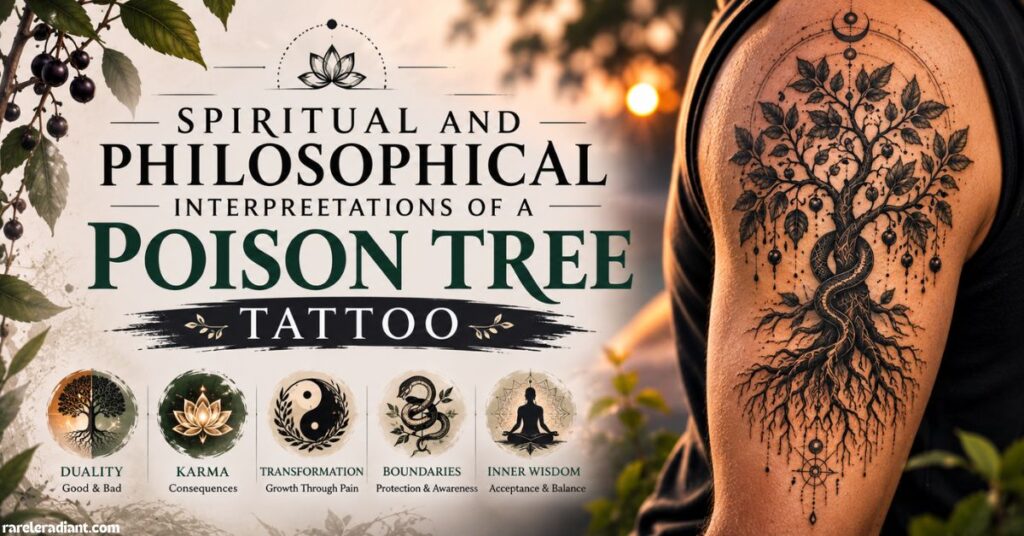
Like planting a seed, the thoughts you nurture eventually shape your character. A positive mindset can inspire growth, while bitterness may lead to emotional suffering.
This timeless idea appears in many philosophies around the world.
Karma and Personal Responsibility
Although William Blake’s poem doesn’t mention karma directly, the concept fits naturally with the poison tree symbol.
Every decision produces a result.
If someone constantly feeds resentment, anger becomes stronger. If they practice forgiveness and self-awareness, emotional healing becomes easier.
The poison tree reminds us that our inner world eventually becomes visible through our actions.
Many tattoo owners choose this design to represent accountability rather than blame.
The Battle Between Light and Darkness
Life rarely exists in extremes.
Most people experience moments of kindness alongside moments of jealousy, fear, disappointment, or anger.
The poison tree symbolizes this ongoing internal struggle.
Rather than pretending darkness doesn’t exist, it encourages people to recognize it before it grows out of control.
Many artists reflect this idea by combining dead branches with healthy leaves or dark roots with bright flowers.
The contrast tells a powerful story.
Read Also: LWK Meaning: Everything You Need to Know About This Slang
Growth Through Suffering
Some of life’s greatest lessons come from painful experiences.
Heartbreak teaches resilience.
Failure builds wisdom.
Loss often deepens appreciation for life.
The poison tree represents this transformation beautifully.
Instead of hiding life’s scars, the tattoo acknowledges them as part of personal growth.
Many people view it as proof that even painful experiences can shape a stronger future.
Choosing Forgiveness Over Resentment
One of the deepest lessons behind the poison tree is simple.
Holding onto anger hurts the person carrying it more than anyone else.
Forgiveness doesn’t erase the past.
It simply removes the emotional weight attached to it.
For this reason, countless tattoo enthusiasts see the poison tree as a daily reminder to let go before resentment becomes permanent.
“The tree grows where emotions are watered. Choose carefully what you feed.”
Poison Tree Tattoo Meaning in the Bible
Many people wonder whether the poison tree has a direct biblical meaning.
The answer is both yes and no.
There isn’t a literal “Poison Tree” mentioned in Scripture. However, several biblical teachings closely resemble the themes found in William Blake’s poem.
Is There a Poison Tree in the Bible?
No.
The Bible never describes a specific poison tree with the same symbolism found in Blake’s work.
However, Scripture frequently uses trees as symbols of:
- Wisdom
- Sin
- Life
- Judgment
- Spiritual growth
- Moral choices
Because of these recurring themes, many Christians associate the poison tree with the spiritual consequences of unresolved anger and hatred.
Biblical Themes Connected to the Symbol
Several biblical principles align naturally with the tattoo’s meaning.
| Biblical Theme | Connection to the Poison Tree |
|---|---|
| Wrath | Anger left unchecked becomes destructive |
| Sin | Hidden wrongdoing grows over time |
| Temptation | Attractive choices may hide harmful consequences |
| Forgiveness | Freedom comes through releasing bitterness |
| Wisdom | Honest communication prevents conflict |
These similarities explain why some believers appreciate the symbolism even though the tattoo itself isn’t a biblical image.
Bible Verses Often Associated With This Tattoo
People frequently connect the poison tree with verses about anger and forgiveness.
Some of the most relevant include:
- Ephesians 4:26 — “Do not let the sun go down while you are still angry.”
- James 1:20 — Human anger does not produce righteous living.
- Hebrews 12:15 — Warns against a “root of bitterness” that causes trouble.
- Proverbs 15:1 — A gentle answer turns away wrath.
Interestingly, the phrase “root of bitterness” closely mirrors the imagery found in Blake’s poem.
Poison Tree Tattoo Meaning for Men
Although anyone can wear this tattoo, many men choose it because it reflects emotional strength gained through hardship.
Rather than representing aggression, it often symbolizes emotional maturity.
Emotional Strength
Many men associate the poison tree with overcoming difficult chapters in life.
These experiences may include:
- Divorce
- Military service
- Personal failure
- Childhood trauma
- Betrayal by friends
The tattoo serves as a reminder that strength comes from growth, not from avoiding pain.
Survival After Betrayal
Broken trust can change how someone views relationships.
For many men, the poison tree symbolizes surviving betrayal without becoming consumed by it.
Instead of remaining trapped in the past, the tattoo marks a new beginning.
Personal Accountability
Some choose this design to remember mistakes they made themselves.
Rather than blaming others, they acknowledge that growth begins with honesty.
This interpretation makes the tattoo deeply personal.
Inner Conflict
Many masculine tattoo designs celebrate victory.
The poison tree is different.
It recognizes that real battles often happen within the mind.
That emotional honesty gives the design remarkable depth.
Poison Tree Tattoo Meaning for Women
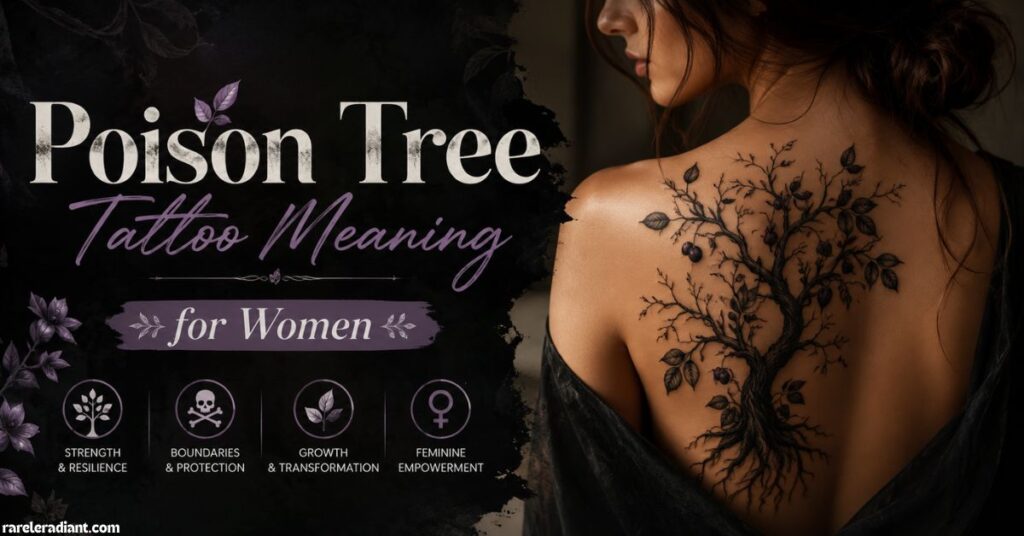
Women often interpret this tattoo through the lens of resilience, healing, and self-discovery.
Its symbolism remains powerful without losing elegance.
Emotional Resilience
Life brings challenges that shape every person differently.
For many women, the poison tree represents surviving difficult experiences while refusing to lose compassion.
The tree becomes a symbol of endurance rather than defeat.
Breaking Free From Toxic Relationships
A poison tree tattoo frequently marks the end of unhealthy relationships.
Examples include:
- Toxic friendships
- Emotional abuse
- Manipulation
- Narcissistic partners
- Controlling family dynamics
The tattoo doesn’t celebrate suffering.
Instead, it celebrates freedom.
Self-Growth After Trauma
Trauma often changes a person’s perspective.
Many women choose this design after rebuilding their confidence and identity.
The tree reminds them that healing is rarely immediate.
Like nature, recovery happens one season at a time.
Independence and Personal Transformation
Some tattoo owners pair the poison tree with blooming flowers or butterflies.
These additions represent hope emerging from darkness.
The combination creates a balanced design that honors both pain and renewal.
Symbolism of Every Part of a Poison Tree Tattoo
Every detail within the artwork contributes to its overall meaning.
Understanding these elements helps create a tattoo that tells a unique story.
The Roots
Roots symbolize the hidden causes behind visible emotions.
They often represent:
- Childhood experiences
- Trauma
- Family history
- Personal values
- Emotional foundations
Large roots suggest deep emotional experiences that continue influencing the present.
The Trunk
The trunk represents stability and endurance.
Even when life becomes difficult, the trunk remains standing.
It symbolizes:
- Strength
- Character
- Personal identity
- Survival
A thick trunk often reflects resilience.
Bare Branches
Leafless branches create a dramatic visual effect.
They usually symbolize:
- Loss
- Isolation
- Emotional exhaustion
- Change
- Reflection
However, bare branches also suggest that new growth remains possible.
Leaves
Healthy leaves often represent:
- Renewal
- Hope
- Wisdom
- Personal development
Some artists intentionally mix living leaves with dead ones to illustrate emotional transformation.
Poison Fruit or Apples
Perhaps the most recognizable symbol comes directly from Blake’s poem.
The fruit appears beautiful.
Yet it hides deadly consequences.
It represents:
- Temptation
- Deception
- Hidden danger
- Revenge
- Emotional consequences
This contrast between beauty and danger makes the poison fruit especially memorable.
Flowers
Flowers soften the darker symbolism.
Depending on the species, they may represent:
- Healing
- New beginnings
- Forgiveness
- Inner peace
- Personal growth
Cherry blossoms, lilies, and roses are popular additions.
Falling Leaves
Falling leaves often symbolize letting go.
Rather than representing death, they suggest the natural end of one chapter before another begins.
Many tattoo artists use drifting leaves to create movement throughout the design.
Read Also: ICL Meaning in Text: Definition, Examples & How to Use It
Common Symbols Paired With a Poison Tree Tattoo
Additional symbols allow the tattoo to tell an even richer story.
Each carries its own layer of meaning.
| Symbol | Meaning |
|---|---|
| Raven | Mystery, wisdom, transformation |
| Snake | Temptation, rebirth, hidden danger |
| Skull | Mortality and acceptance |
| Thorny Rose | Love mixed with pain |
| Clock | Time heals emotional wounds |
| Hourglass | Every emotion has consequences |
| Broken Chain | Freedom from the past |
| Crescent Moon | Change, intuition, new beginnings |
| William Blake Quote | Honors the literary origin |
These combinations allow every poison tree tattoo to become deeply personal.
Best Poison Tree Tattoo Styles
Tattoo style dramatically changes the mood of the design.
Some styles emphasize realism.
Others create a symbolic or artistic appearance.
Blackwork
Blackwork remains one of the most popular choices.
Its bold contrast creates dramatic silhouettes while highlighting twisted branches and detailed roots.
This style ages well and works beautifully on both small and large tattoos.
Fine Line
Fine line tattoos use delicate strokes to create elegant tree designs.
They often appeal to people who prefer subtle symbolism over heavy shading.
Despite their simplicity, fine line poison trees can still carry profound emotional meaning.
Gothic
Gothic tattoos emphasize mystery and atmosphere.
Artists often include:
- Dead forests
- Ravens
- Fog
- Cracked earth
- Dark skies
- Ancient branches
This style closely reflects the mood of Blake’s original poem.
Illustrative
Illustrative tattoos resemble detailed artwork found in classic books.
They combine realism with artistic creativity.
This approach works especially well for literary-inspired poison tree designs.
Neo-Traditional
Neo-traditional tattoos feature bold outlines, vibrant colors, and decorative details.
They balance classic tattoo aesthetics with modern artistry.
Poison apples, flowers, and symbolic animals often appear in this style.
Realism
Realistic poison tree tattoos showcase incredible detail.
Artists focus on bark texture, shadows, leaves, and natural lighting.
Although realism requires significant skill, the finished result can resemble a photograph.
Watercolor
Watercolor tattoos introduce soft color gradients behind dark tree silhouettes.
The blend of vivid colors and dramatic imagery creates a striking contrast between beauty and emotional complexity.
Minimalist
Minimalist poison tree tattoos rely on clean lines and simple composition.
Even without elaborate detail, these tattoos communicate powerful symbolism.
They work well for wrists, ankles, or behind-the-ear placements.
In the next section, we’ll explore the symbolism of tattoo colors, the best body placements, personalization ideas, aftercare tips, common misconceptions, frequently asked questions, and the final meaning behind this unforgettable design.
Color Symbolism in Poison Tree Tattoos
The colors you choose can completely change the message of your tattoo. While black ink remains the most popular option, many people add color to reflect their personal story.
Here’s what common colors symbolize.
| Color | Symbolic Meaning |
|---|---|
| Black | Mystery, grief, resilience, strength |
| Red | Anger, passion, revenge, sacrifice |
| Green | Growth, healing, renewal, hope |
| Purple | Wisdom, spirituality, transformation |
| Gray | Reflection, balance, acceptance |
| Blue | Peace, emotional healing, trust |
| Brown | Stability, endurance, connection to nature |
Many tattoo artists combine dark black branches with subtle green leaves to show that healing can grow even after painful experiences.
Likewise, adding a single red poison apple creates a dramatic focal point that immediately draws attention to the tattoo’s deeper meaning.
Best Placement Ideas for a Poison Tree Tattoo
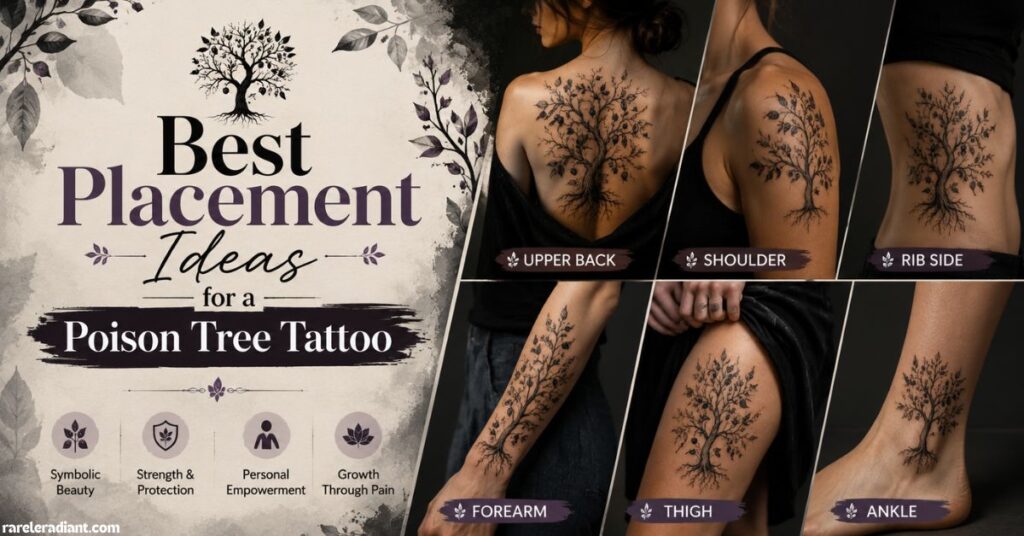
Placement affects both the appearance and symbolism of a tattoo. Some areas provide enough space for intricate artwork, while others create a subtle reminder that’s easy to hide or display.
Forearm
The forearm is one of the most popular locations.
It offers enough room for detailed branches, roots, and symbolic elements without becoming overwhelming.
Many people choose this placement because they can easily see the tattoo every day.
Best for:
- Medium-sized designs
- Fine-line tattoos
- Blackwork
- Literary quotes
Sleeve
A full or half sleeve gives the artist room to tell an entire story.
The roots can begin near the wrist while the branches extend toward the shoulder.
Additional symbols like ravens, snakes, clocks, or falling leaves fit naturally into this layout.
Chest
A chest tattoo often represents deeply personal emotions.
Since it’s close to the heart, many people associate this placement with love, betrayal, forgiveness, or emotional healing.
Back
The back provides the largest canvas on the body.
This placement works well for highly detailed poison tree scenes that include landscapes, storm clouds, birds, or literary imagery.
Large back pieces can become true works of art.
Rib Cage
The rib cage remains one of the most meaningful placements.
Although tattooing this area can be painful, many people choose it because the design feels private and personal.
Thigh
The thigh offers plenty of space for large illustrations while remaining easy to cover.
It’s also ideal for colorful designs with flowers or realistic shading.
Calf
Vertical tree designs naturally fit the calf.
This placement works especially well for minimalist or blackwork tattoos.
Wrist
Small poison tree tattoos look elegant on the wrist.
Although space is limited, a simple tree silhouette or tiny poison apple can still carry significant meaning.
Poison Tree Tattoo Size Guide
The size of your tattoo should match both your artistic vision and the amount of symbolism you want to include.
| Size | Best For | Detail Level |
|---|---|---|
| Small (2–4 inches) | Wrist, ankle, behind the ear | Minimal details |
| Medium (5–8 inches) | Forearm, calf, shoulder | Balanced symbolism |
| Large (9–15 inches) | Back, chest, thigh | High detail |
| Full Sleeve | Storytelling designs | Maximum artistic freedom |
Larger tattoos allow artists to include roots, fruit, ravens, quotes, and detailed shading without making the design feel crowded.
How to Personalize a Poison Tree Tattoo
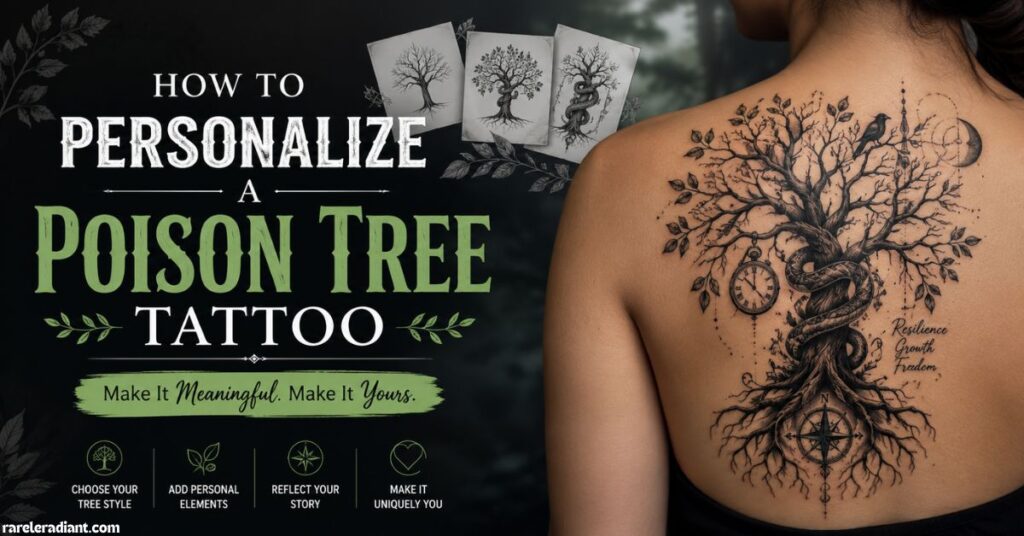
The most memorable tattoos tell a personal story.
Instead of copying someone else’s design, consider adding elements that reflect your own experiences.
Add Meaningful Dates
Important dates can quietly become part of the artwork.
For example:
- Recovery anniversary
- Wedding date
- Graduation
- Birth of a child
- A loved one’s memorial date
Roman numerals blend beautifully into tree branches or roots.
Include Literary Quotes
Since the design originates from William Blake’s poem, many people include a short quotation.
Popular examples include:
“I was angry with my friend.”
“Till it bore an apple bright.”
“In the morning glad I see.”
Keep quotes short to maintain readability over time.
Use Symbolic Animals
Animals can strengthen the story behind the tattoo.
Some popular choices include:
- Raven – Wisdom and mystery
- Owl – Knowledge and self-awareness
- Wolf – Loyalty and survival
- Snake – Transformation and temptation
- Butterfly – Healing and renewal
- Fox – Intelligence and adaptability
Each addition creates another layer of symbolism.
Choose a Specific Tree Species
Different trees carry unique meanings.
| Tree Species | Symbolism |
|---|---|
| Oak | Strength and endurance |
| Willow | Grief and healing |
| Apple Tree | Temptation and consequence |
| Yew | Mortality and rebirth |
| Birch | New beginnings |
| Elm | Stability and resilience |
Choosing a real tree species makes the design even more meaningful.
Blend Nature With Personal Storytelling
Many modern tattoo designs combine several symbolic elements into one composition.
Examples include:
- Poison tree with blooming flowers
- Dead branches transforming into healthy leaves
- Tree roots shaped like a heartbeat
- Ravens flying toward the moon
- A broken chain wrapped around the trunk
- An hourglass buried among the roots
These combinations turn a beautiful tattoo into a deeply personal narrative.
Read Also: Snowball Kiss Meaning: Everything You Need to Know in 2026
Things to Consider Before Getting This Tattoo
Before committing to permanent ink, spend time thinking about both the design and its long-term meaning.
Understand the Symbolism
Don’t choose the tattoo simply because it looks interesting.
Learn its literary, emotional, and psychological meanings first.
Understanding the symbolism helps ensure the tattoo still feels meaningful years later.
Think About Future Meaning
Ask yourself:
- Will this design still represent me in ten years?
- Does it reflect healing or unresolved pain?
- Am I choosing it for the right reasons?
A tattoo should tell your story, not someone else’s.
Choose an Experienced Tattoo Artist
Tree tattoos require exceptional precision.
An experienced artist can create:
- Natural bark texture
- Balanced branch composition
- Smooth shading
- Realistic roots
- Fine details that age well
Always review an artist’s portfolio before booking an appointment.
Consider Placement Carefully
Think about:
- Professional visibility
- Pain level
- Available space
- Future tattoo additions
Larger designs often need room to breathe.
Long-Term Aging
Fine details naturally soften over time.
To help preserve your tattoo:
- Wear sunscreen.
- Keep your skin moisturized.
- Schedule touch-ups if needed.
- Follow proper aftercare instructions.
Good maintenance helps detailed tree tattoos remain sharp for many years.
Caring for a Detailed Tree Tattoo

Even the best tattoo can lose its beauty without proper care.
Healing During the First Two Weeks
Follow your artist’s instructions carefully.
General recommendations include:
- Wash gently with fragrance-free soap.
- Apply a thin layer of recommended ointment.
- Avoid scratching or peeling.
- Wear loose clothing.
- Keep the tattoo clean.
Proper healing reduces the risk of infection and protects fine details.
Preventing Ink Fading
After healing, daily care becomes much simpler.
Protect your tattoo by:
- Using SPF 30 or higher outdoors
- Staying hydrated
- Moisturizing regularly
- Avoiding excessive sun exposure
- Maintaining healthy skin
Small habits make a noticeable difference over time.
Long-Term Skin Care
Healthy skin helps tattoos stay vibrant.
Simple routines such as drinking enough water, eating a balanced diet, and protecting your skin from UV damage will preserve both color and detail.
Common Misconceptions About Poison Tree Tattoos
Despite its popularity, several myths surround this design.
Does It Always Represent Revenge?
No.
Although revenge appears in William Blake’s poem, today’s tattoo meanings are far more diverse.
Many people choose it to symbolize:
- Healing
- Forgiveness
- Emotional maturity
- Personal growth
- Survival
Is It a Negative Tattoo?
Not at all.
The design acknowledges difficult emotions, but it often celebrates overcoming them.
Many wearers see it as one of hope rather than darkness.
Is It Only for Fans of William Blake?
No.
While Blake inspired the symbol, countless people appreciate the tattoo without studying his poetry.
The universal themes of growth, anger, forgiveness, and resilience make the design meaningful across different cultures and backgrounds.
Can the Meaning Change Over Time?
Absolutely.
One of the most beautiful aspects of tattoos is that their meaning evolves with the wearer.
A poison tree tattoo that once represented heartbreak may later symbolize wisdom, healing, or emotional freedom.
Frequently Asked Questions About Poison Tree Tattoo Meaning
What does the poison tree tattoo mean?
The poison tree tattoo meaning usually represents hidden anger, betrayal, emotional growth, revenge, healing, and the consequences of unresolved emotions. While inspired by William Blake’s poem, modern interpretations often focus on resilience and personal transformation rather than negativity.
What does a poison tree tattoo mean emotionally?
If you’re asking what does a poison tree tattoo mean, the emotional interpretation often centers on feelings that were never expressed openly. It can symbolize heartbreak, suppressed anger, forgiveness, or the decision to move forward after painful experiences.
Can a poison tree tattoo represent healing?
Yes.
Many people choose this design after overcoming trauma, toxic relationships, or emotional hardship.
Rather than celebrating pain, it honors the journey toward recovery and self-discovery.
Is the design connected to William Blake?
Yes.
The tattoo draws its primary inspiration from William Blake’s 1794 poem “A Poison Tree.” However, modern tattoo meanings have expanded beyond the poem to include psychology, spirituality, and personal growth.
What is the biblical meaning of a poison tree tattoo?
There isn’t a literal poison tree in the Bible.
However, many people connect the design with biblical teachings about anger, forgiveness, temptation, and the “root of bitterness” mentioned in Hebrews 12:15.
Which tattoo style looks best for this design?
The best style depends on your personal taste.
Popular choices include:
- Blackwork
- Fine line
- Gothic
- Neo-traditional
- Realism
- Illustrative
- Watercolor
- Minimalist
Each style creates a different emotional impact.
Where should a poison tree tattoo be placed?
Popular placements include:
- Forearm
- Sleeve
- Chest
- Back
- Rib cage
- Thigh
- Calf
- Wrist
Choose a location that fits both the size of your design and its personal significance.
Can I combine a poison tree with other tattoo symbols?
Absolutely.
Many people personalize their tattoo with ravens, snakes, clocks, flowers, butterflies, moons, meaningful quotes, or symbolic tree species to create a design that reflects their own life story.
Final Thoughts on Poison Tree Tattoo Meaning
The poison tree tattoo meaning goes far beyond its dark appearance. It tells a story about human emotions, personal choices, and the lasting impact of what we allow to grow within us. Inspired by William Blake’s timeless poem, this design has evolved into a powerful symbol of self-awareness, resilience, and transformation.
Whether you’re wondering what does the poison tree tattoo mean or what does a poison tree tattoo mean, the answer depends on the story you want your tattoo to tell. For some, it reflects the pain of betrayal. For others, it represents forgiveness, healing, and the courage to leave bitterness behind.
Ultimately, the poison tree isn’t just a symbol of darkness. It’s a reminder that every emotion is like a seed. The ones you nurture today will shape the person you become tomorrow. When chosen with intention, a poison tree tattoo becomes more than body art it becomes a lasting reflection of growth, wisdom, and the strength to rise above life’s most difficult seasons.

Ilona Leijer is a seasoned content creator with over 4 years of experience specializing in witty puns, clever jokes, wordplay and engaging humor. His creative work is the driving force behind Rarele Radiant , a platform dedicated to bringing laughter, creativity, and memorable content to readers around the world.